One of the single most frequent questions road trippers and self-drivers ask before visiting Iceland is: “What kind of car do I actually need?”
It’s easy to get overwhelmed. Rent a standard 2WD, and you risk struggling in snow or on unpaved side roads or not being able to access Iceland’s highland area via the infamous “F-Roads”, also known as mountain roads. Rent a massive 4×4, and you might spend a lot of extra money on daily rates and fuel for roads that are completely paved and smooth.
Iceland Roadbook recommends Go Car Rental. Lock in reliable local service and 24/7 roadside support. [Save 5% on all Go Car Rental bookings through our direct partner link].
As a local guide who has driven extensively all across the island, I can tell you that there is no single best vehicle for every trip to Iceland. The right choice depends entirely on three factors: when you visit, where your route takes you, and how you plan to sleep.
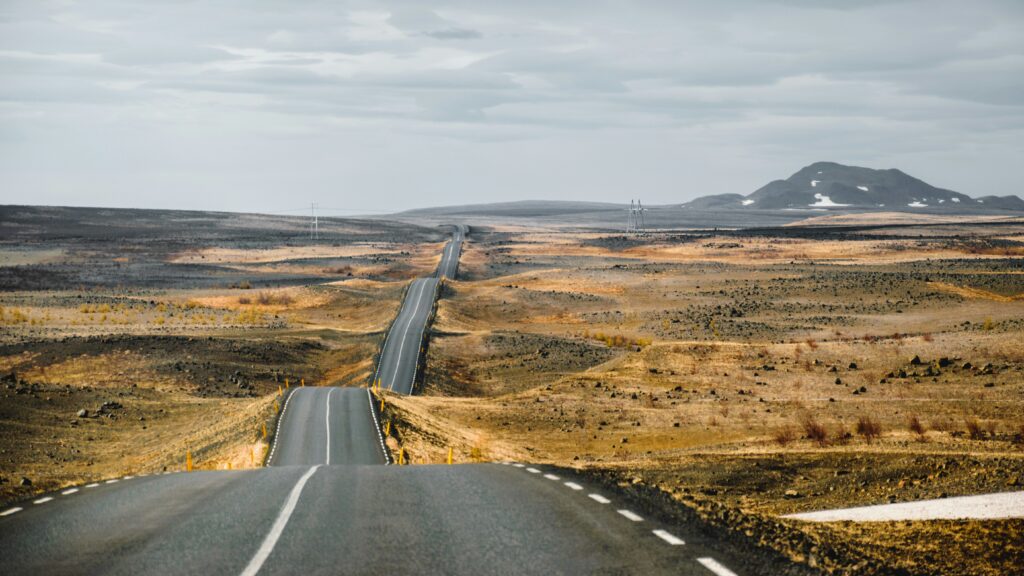
Here is a straightforward breakdown to help you pick the right rental car for your route, without wasting money or risking your safety.
Scenario A: When a 2WD Vehicle Is Perfectly Fine
If you are planning a traditional self-drive trip during the summer months (May through October), a standard 2WD compact or mid-size car is often all you need.
Permitted Routes
- The Golden Circle (Þingvellir, Geysir, Gullfoss)
- The entire Ring Road (Route 1)
- The Snaefellsnes Peninsula
- Other paved, main routes
- Unsurfaced secondary roads that are not listed as F-Roads
Iceland’s main highway, Route 1 (the Ring Road), is entirely paved and regularly maintained throughout the summer. You do not need ground clearance or all-wheel drive to drive anywhere along this main road.
Key Considerations
- Summer Only: 2WD vehicles are only recommended when snow and ice are off the main roads. Snow and ice mainly occur in the months of November-mid April, although if you are in north Iceland, wintery conditions sometimes do occur in October or May. Snow may occur in south Iceland in October, but is quite unusual.
- No F-Roads: Driving a 2WD vehicle on a listed F-Road (mountain road) is strictly illegal (more on that below).
- Unsurfaced Roads: Many smaller or secondary roads in Iceland outside of the main roads are unsurfaced (i.e. made of gravel) but are still easily passable by 2WD vehicles. An unsurfaced road is not necessarily a listed F-Road. If a gravel-surfaced road is not considered an F-Road and you are comfortable driving on it, then you may take a 2WD vehicle along it. Some common sense is required! Not all non F-listed roads are appropriate for all 2WD vehicles, and your decision to drive or not depends on your vehicle size and type, your comfort level and the weather conditions.
Scenario B: When a 4×4 Is Legally Required or Highly Recommended
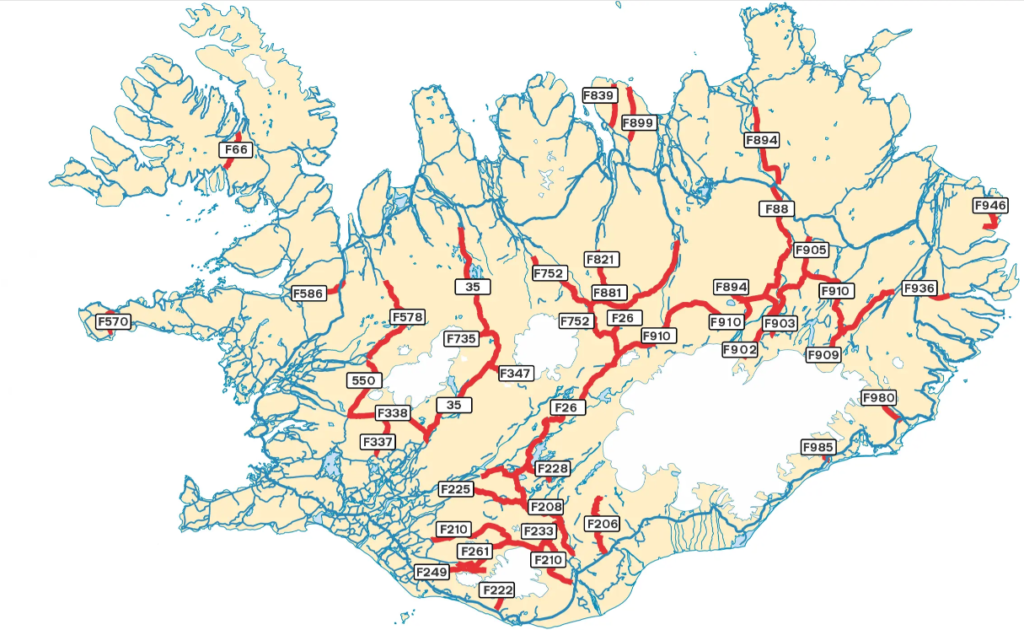
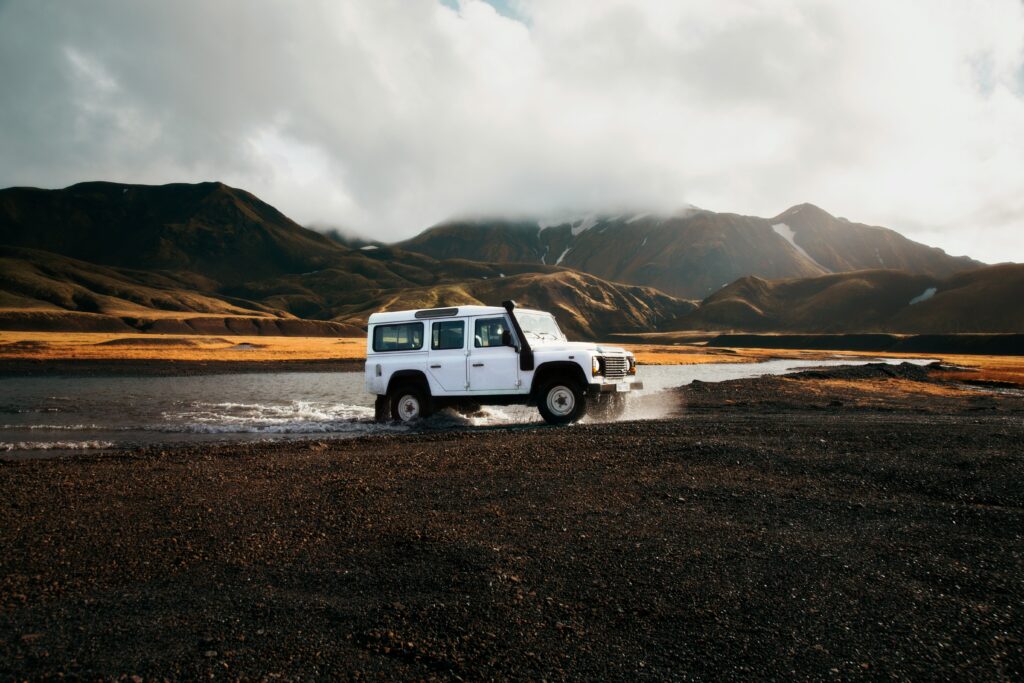
If you want adventure on any of the F-Roads into Iceland’s highland interior, then a 4×4 is essential. If you are visiting from November-mid April when wintery conditions on the roads are likely, then a 4×4 is highly recommended. We also recommend a 4×4 for the Westfjords. Being a very remote part of the island, many of the smaller roads are gravel or in poorer condition.
The Law (F-Roads)
Under Icelandic law, driving a 2WD vehicle on any designated F-road (Highland mountain tracks, prefixed with an ‘F’ like F208 or F26) is strictly illegal. Doing so carries heavy government fines and immediately voids all insurance coverage. If you break down on an F-road in a 2WD, you will incure very high costs for any rescue or repair.
Road Conditions on F-Roads
F-roads cross Iceland’s dynamic interior—a landscape shaped by young volcanic ash, sharp, uncompacted basalt gravel, steep gradients, and sometimes, unbridged glacial rivers. A high-clearance 4×4 (such as a Dacia Duster, Toyota Land Cruiser, or Suzuki Jimny) provides the necessary underbody protection, grip required to negotiate rough tracks and rocky terrain safely and the ability to cross smaller rivers.
Winter Travel (November – April)
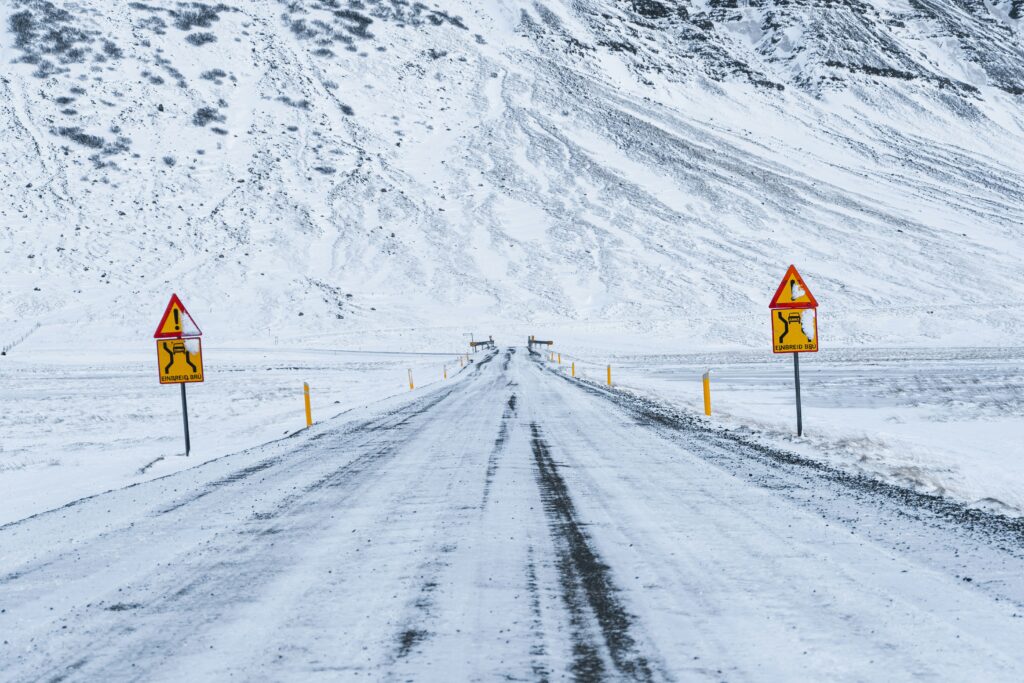
- Even if you stay strictly on paved main roads, Icelandic winter weather brings sudden snow, ice, and heavy winds. A 4×4 provides better grip on icy roads and handles snow better than a 2WD.
- Make sure that your rental company provides you with high-quality winter tires with studs as these are essential for driving in icy conditions. All rental cars from our affilate partners at Go Car Rental are fitted with quality studded winter tires and include an ice scraper.
Key Considerations
- Bad weather forcing road closures or dangerous driving conditions are far more likely in winter. We recommend checking the Icelandic Road Authority, SafeTravel Iceland and the Icelandic Meterological Office daily for warnings, road conditions and weather reports.
- Make sure that your rental company provides you with high-quality winter tires with studs as these are essential for driving in icy conditions. All rental cars from our affilate partners at Go Car Rental are fitted with quality studded winter tires and include an ice scraper.
Scenario C: The Campervan Advantage
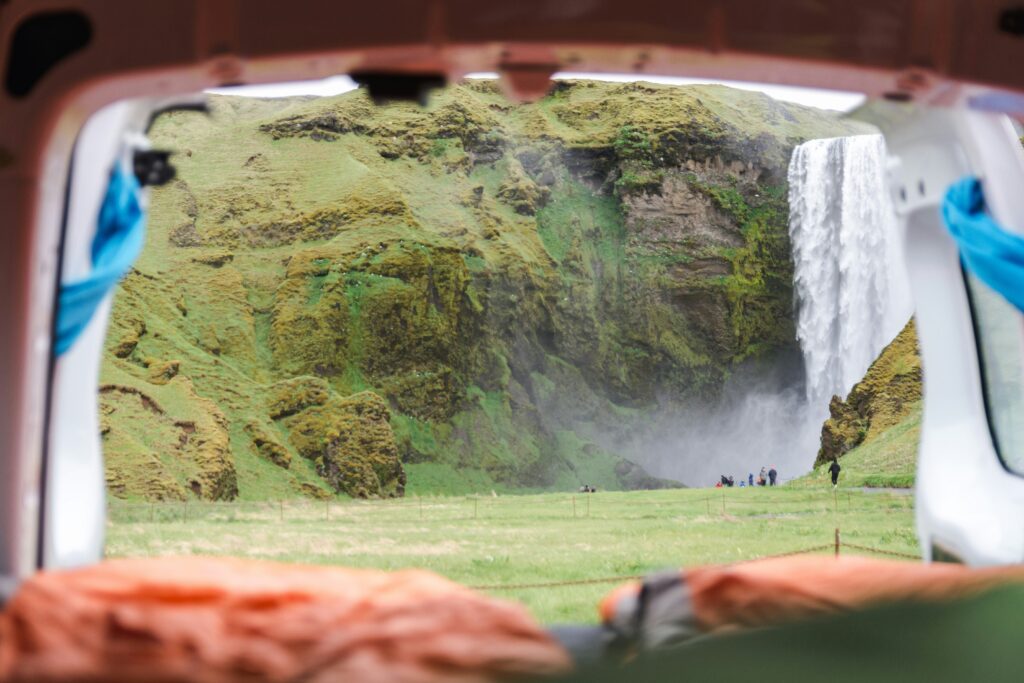
Campervans have exploded in popularity across Iceland, offering total freedom from fixed hotel check-ins and rigid nightly schedules. Campervans are best suited for travelers looking for ultimate flexibility, budget-conscious road trippers, and photographer/outdoors enthusiasts who want to wake up right next to national parks and mountain ranges.
Key Considerations
- Wild Camping is Illegal: You cannot pull over and sleep on side roads, pull-offs, or beaches. Campervans must stay overnight at designated campsites. Luckily, there are many campsites across Iceland. Check out the map at Tjald.is for further details and a complete list.
- 2WD vs. 4×4 Campers: Standard 2WD campervans work great for summer campsite-hopping along the Ring Road. However, if you plan to drive any F-Roads and camp near the interior, you will need a specialized 4×4 campervan.
- Campervans in Winter? Yes, if you are truly an adventerous soul, you can do a campervan trip in Iceland during the winter. It gives you the ultimate flexibility to chase the Northern Lights and the ability to change plans quickly with Iceland’s unpredictable winter weather. If you do plan choose a self-drive campervan trip in Iceland in winter, be sure to stick to main roads, keep up-to-date on road conditions and weather forecasts and make sure your camper comes fitted with a good heater! We would also recommend a 4×4 camper. Fortunately, our partners at Go Rentals offer campers that are specially kitted-out for Icelandic winters. Be sure to plan your campsites carefully, as many close during the winter months.
Quick Comparison Matrix
| Vehicle Class | Best Season | F-Road Legal | Recommended For |
| 2WD Rental Car | May-October | No | Summer Ring Road, Golden Circle, South Coast, Snæfellsnes |
| 4×4 Rental Car | Year-round | Yes | Winter travel, F-roads, Westfjords, Highlands, peace of mind on gravel |
| 2WD Campervan | May-October | No | Budget travelers, flexible summer campsite hopping along main routes |
| 4×4 Campervan | Year-round | Yes | Remote highland camping, rough terrain, winter camping along main routes |
Final Recommendation & Reader Discount
Go Car Rental is a top-rated, locally owned Icelandic operator based near Keflavík Airport that specializes in transparent, high-value rentals for self-drive travelers. Their diverse fleet spans economy 2WD hatchbacks, rugged F-road-ready 4×4 SUVs, and campervans—all backed by zero-deposit options, clear insurance packages, unlimited mileage, free airport transfers, and complimentary studded winter tires fitted standard across their entire fleet.
Exclusive Discount for Iceland Roadbook Readers
Our recommended affiliate car rental company is Go Car Rental—one of Iceland’s top-rated local fleet operators known for transparent pricing and excellent customer service.
Book through our above link with Go Car Rental to lock in an exclusive 5% discount on your vehicle.
Let’s Hit The Road!