Driving in Iceland is an unforgettable and unique experience
Renting a car and taking to the open road is hands-down the best way to see Iceland. It gives you complete freedom to chase the best weather, avoid the crowds and visit hidden spots.
However, Iceland’s road conditions are unlike almost anywhere else in the world. Between unpredictable and constantly changing weather (even in summer), gravel roads, dedicated 4×4 “F-Roads”, single-lane bridges, and roaming livestock, driving here requires a few special precautions.
As a local guide navigating Iceland’s roads for the last 10 years, I have come across many tourists who make easily avoidable (and often expensive) mistakes. Before you get behind the wheel, here is my curated list of the 10 most crucial driving rules and local safety tips every independent driver must know.
Want access in one place to all this information and much more, including my hand-curated itineraries for self drivers? Check out our range of Roadbooks for independent travelers to Iceland.
Safe driving!
1. Know Your Official Road Apps (Check Them Daily)
Weather in Iceland changes rapidly, and I really mean this! You can easily end up in a storm even in the middle of summer! I recommend you bookmark and check these local sites each morning:
- Road.is: Shows live webcams, road closures, and color-coded road ice & snow conditions. It also shows which roads are open to the Highlands during the summer period.
- Vedur.is: The official Icelandic Met Office weather forecast. It will also show wind, rain, and storm warnings. The page is in English!
- SafeTravel.is: Download the SafeTravel app for instant safety alerts and to submit your travel plan.
Wind is often the most dangerous weather factor for drivers in Iceland. Icelandic wind really is like nothing else! Pay attention to, and respect, weather warnings, and pay special attention when wind is combined with winter driving conditions.
2. Learn the Speed Limits & Road Signs
Whilst there are few fixed speed cameras outside of the Reykjavík area and road tunnels, it is common to see police cars on the road. Icelandic law gives very little leeway for speeding and traffic fines are steep. Unless a sign explicitly posts otherwise, default speed limits are:
- 30–50 km/h (19–31 mph): Residential and urban areas.
- 80 km/h (50 mph): Rural gravel roads.
- 90 km/h (56 mph): Paved rural highways (including Route 1 / Ring Road).
Many road signs in Iceland may be unfamiliar to visitors, so it is useful to familiarize yourself with them. A great resource for this can be found at https://safetravel.is/driving/road-signs/.
3. Never Stop in the Middle of the Road for Photos
With endless breathtaking volcanic peaks, fields of Icelandic Horses and diverse open landscapes, it is tempting to pull over constantly on the road to take photos. However, stopping on the narrow shoulder or blocking traffic on the main road is extremely dangerous and has been the cause of several serious fatal traffic accidents in Iceland. There are many small roads and pull-ins that you can use to safely park in instead. If you wouldn’t park on the highway to take pictures in your home country, please don’t do it here!
4. Keep Headlights On 24/7
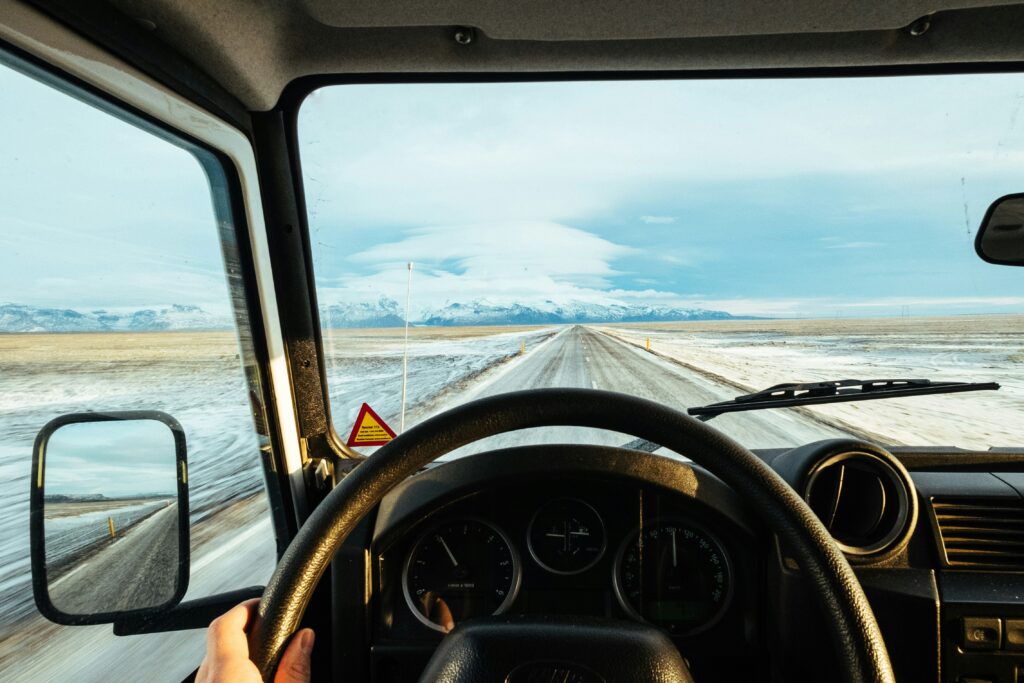
By Icelandic law, your low-beam headlights must be turned on at all times—day or night, summer or winter. Automatic daytime running lights often do not illuminate your rear taillights, so always switch your headlights to the manual “On” setting. Locals will often flash vehicles who are driving without headlights on.
5. Check If Your Route Requires a 4×4 (F-Roads)
If you plan to head into the Highlands, you will encounter F-roads (meaning “Mountain-Roads” in Icelandic). By law, standard 2WD rental cars are forbidden on F-roads. You must have a high-clearance 4×4 vehicle. Furthermore, standard rental insurance never covers damage caused by river crossings! Make sure you are insured for F-Roads if you hire a 4×4 vehicle.
6. How to Cross Single-Lane Bridges
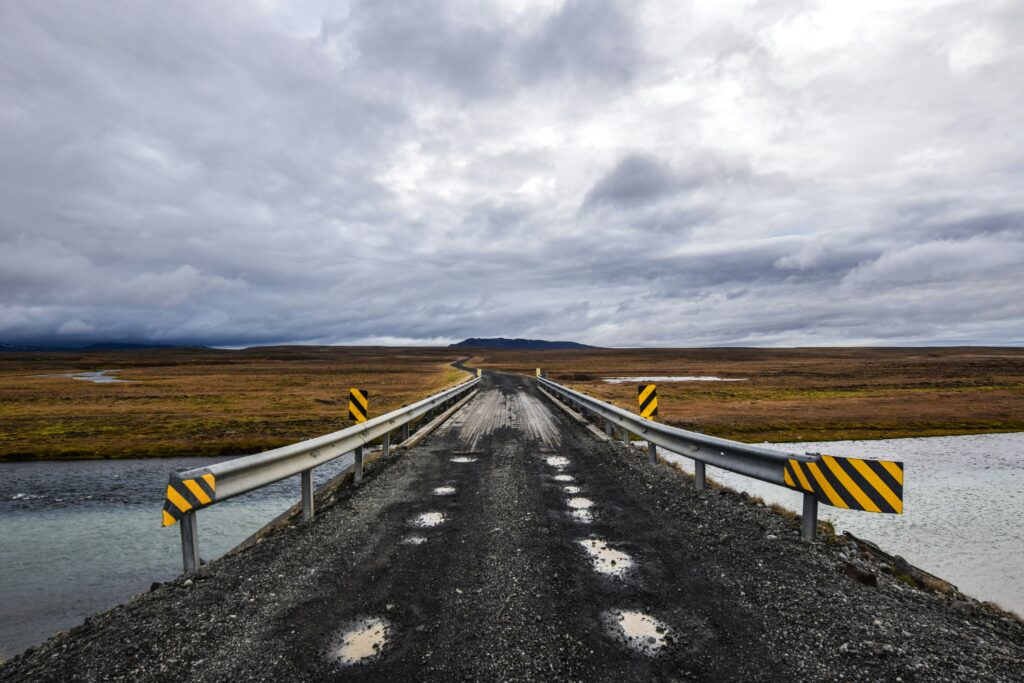
Many bridges along the Ring Road (Route 1) and rural routes compress down to a single lane (Einbreið brú). The speed limit on such bridges is 50 km/hr.
- The Rule: The vehicle closest to the bridge has priority. Slow down upon approach, take the road if you are the closer vehicle or wait until oncoming traffic clears if the vehicle on the opposite side is closer.
- Tip for efficiency: If there is a line of traffic waiting on the otherside and the vehicle in front of you is already crossing the bridge, your best option is to follow and cross the bridge also. It is nice to show curtesy, but constant stop-starting of vehicles either side of the bridge slows the traffic flow and frustrates locals.
7. Never Drive Off-Road (It Is Strictly Illegal)
Off-road driving causes severe, irreversible damage to Iceland’s fragile volcanic soils and moss ecosystems, which can take decades to recover. Stick strictly to marked roads and tracks. Fines for off-roading start in the thousands of dollars. Locals are extremely vigilent about this and will photograph and pass on your vehicle details to the police if they witness you off-road driving. Please help us to protect our landscape and maintain its untouched look.
8. Hold on to Your Car Door!
Icelandic winds can be fierce enough to catch open car doors and bend their hinges backward. In high winds, always hold your door with both hands when getting out, and park facing into the wind whenever possible.
9. Watch Out for Free-Roaming Sheep
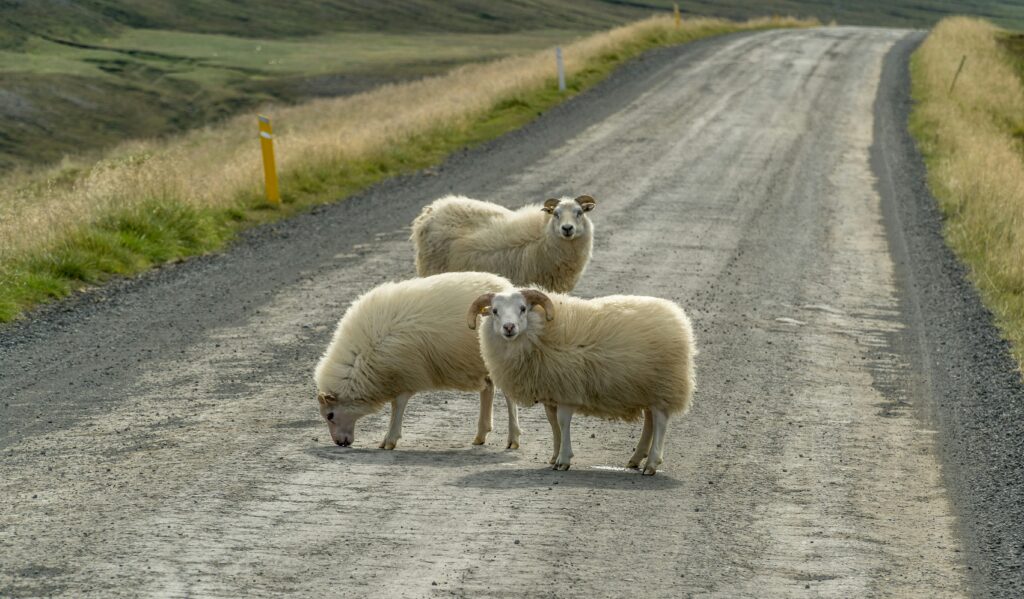
During late spring and summer, sheep roam freely across the countryside. They often graze on the roadside and are unfenced. If you see a lamb on one side of the road and its mother on the other, slow to a crawl, the lamb will almost always run across the road to join her!
10. Respect the Icelandic Roundabout Priority Rule
If you drive through Reykjavík or major regional towns, you will encounter multi-lane roundabouts and these can often be confusing for visitors.
- The Rule: In Iceland, the inner lane always has the right of way. Vehicles in the outer lane must yield to cars exiting from the inner lane.
Ready to Plan Your Ultimate South Coast Drive?
Driving safely is step one—planning an incredible route without missing the best geologic wonders and hidden waterfalls is step two!
If you want a stress-free route complete with exact daily timing, turn-by-turn stops for each day, accommodation & activity recommendation and local food spots, check out our range of Iceland Roadbooks.